


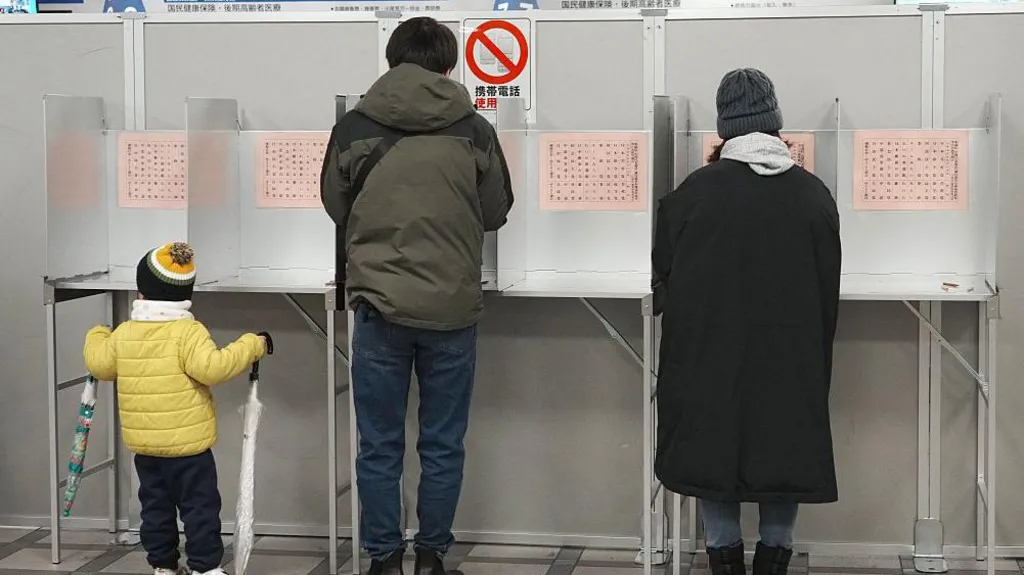
Voters across Japan headed to the polls despite heavy snowfall in a snap election called by Prime Minister Sanae Takaichi, whose coalition is widely expected to secure a strong victory. The mid-winter vote, the first of its kind in 36 years, was called soon after Takaichi won her party leadership to seek a fresh public mandate.
The election follows a turbulent period for the Liberal Democratic Party (LDP), which had lost its parliamentary majority and faced corruption scandals. However, Takaichi’s popularity and campaign promises appear to have revived support, with opinion polls suggesting her coalition with the Japanese Innovation Party could win up to 300 seats in the 465-member lower house.

Many voters expressed concerns over rising living costs, housing prices and economic uncertainty. Some welcomed the prime minister’s spending plans, while critics questioned whether increased public spending could further strain Japan’s already high government debt and address long-term economic challenges.
Severe winter weather affected turnout in several regions, with heavy snow reported in parts of central and northern Japan. Transport disruptions included cancelled flights, suspended train lines and ferry services. Early voting turnout was slightly lower than in the previous election, partly due to weather conditions, though many citizens still braved the snow to cast their ballots.


