


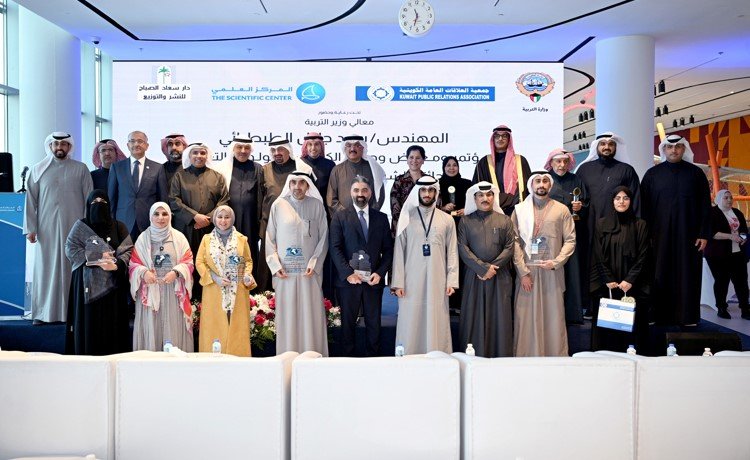
The Minister of Education, Sayed Jalal Al-Tabtabai, affirmed the ministry’s strong commitment to introducing technology, artificial intelligence, and cybersecurity concepts into school curricula in a structured and age-appropriate manner. He said the initiative aims to promote responsible use of technology while strengthening students’ awareness of its educational and ethical aspects from an early stage.
Al-Tabtabai made the remarks during the opening ceremony of the fourth edition of the Kuwait Award for Educational Technology Conference and Exhibition, known as the Sheikh Abdullah Al-Mubarak Al-Sabah Award. The event was held under the theme “Artificial Intelligence: A Cornerstone for Educational Development and Building the Future” and was organized by the Kuwait Public Relations Association at the Scientific Center.
The minister described the award as a distinguished national model that supports excellence, encourages creativity, and promotes a culture of digital transformation in education. He noted that these efforts align with New Kuwait 2035, which places human capital and the knowledge economy at the heart of national development and calls for a modern, flexible education system that can keep pace with rapid global change.

In her address, Sheikha Intisar Salem Al-Ali, a member of the conference’s Higher Committee, said that artificial intelligence in education has long focused on improving academic performance and efficiency. However, she stressed that true educational development requires supporting the human dimension of learners, not just the technology itself. She added that AI has become an integral component of modern education and that its design and effective use are essential to achieving meaningful outcomes.
Meanwhile, Jamal Al-Nasrallah, Chairman of the Board of Directors of the Kuwait Public Relations Association, said the organization of the conference under the patronage of the Minister of Education reflects a firm belief that education is the foundation of development. He emphasized that advancing education is no longer optional but a national necessity driven by the accelerating pace of technological change.
Al-Nasrallah explained that the conference serves as a national platform for dialogue and knowledge exchange, showcasing the latest developments in educational technology. It also explores ways to apply modern tools and artificial intelligence to improve teaching methods, enhance learning outcomes, support digital transformation in educational institutions, and strengthen cooperation between government and private sector entities.


