


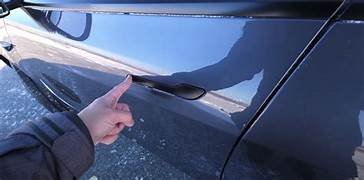
China has become the first country in the world to prohibit the use of hidden door handles in electric vehicles, citing growing safety concerns. The controversial design, popularised globally by Tesla and closely associated with its CEO Elon Musk, has come under increased scrutiny following several serious accidents.
The decision follows multiple fatal incidents involving electric vehicles in China, including two deadly crashes linked to Xiaomi’s EVs, where suspected power failures reportedly prevented doors from being opened.
Under new regulations issued by China’s Ministry of Industry and Information Technology, all passenger vehicles sold in the country must be equipped with mechanical door release systems on both the inside and outside. The rules are scheduled to take effect on 1 January 2027.
The regulations specify that each passenger door, excluding the boot, must feature an external recessed space of at least 6cm × 2cm × 2.5cm, ensuring the handle remains accessible even during electrical failures. Inside the vehicle, clear visual indicators showing how to open the doors must also be installed.
Manufacturers with models already approved and nearing market launch will be given a two-year grace period to modify their designs.

Hidden door handles are currently common across China’s new energy vehicle (NEV) segment, which includes electric, hybrid, and fuel-cell vehicles. According to figures reported by China Daily, nearly 60% of the country’s top 100 best-selling NEVs use concealed handles.
Although the regulation applies only to vehicles sold in China, the country’s dominant role in the global automotive supply chain means the impact could extend well beyond its borders. Safety regulators worldwide are already examining similar issues.
In the United States, the National Highway Traffic Safety Administration launched an investigation in November into Tesla’s electronic door handles after receiving complaints that they failed without warning. The probe includes nine reports involving 2021 Tesla Model Y vehicles, with four cases requiring owners to break windows to rescue passengers, including children.
European authorities are also reviewing whether similar safety standards should be introduced, signalling that China’s move could mark the beginning of a broader global shift in EV design rules.