


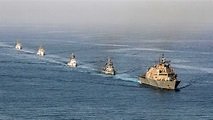
Commercial ships passing through the Strait of Hormuz are increasingly operating under “dark” or Emissions Control conditions as regional tensions and military activity intensify in the Gulf.
According to marine tracking company Windward, vessels are increasingly turning off their Automatic Identification System (AIS) transponders to hide their location and identity while travelling through the narrow waterway.
This practice, commonly referred to as operating “dark,” is often used to avoid surveillance, sanctions monitoring or potential military targeting in high risk regions.
Windward reported increased activity by the Islamic Revolutionary Guard Corps, including fast attack craft movements, swarm style formations and escort like operations near commercial shipping lanes in the Strait.
The company identified at least nine commercial tanker movements through Hormuz on Monday, including vessels linked to so called “dark fleets” carrying liquefied petroleum gas and petroleum products.
Reports also indicated that Qatar liquefied natural gas cargoes resumed transit through Hormuz for the first time since the waterway’s temporary disruption earlier this year.

Maritime experts say the growing use of Emissions Control or “Emcon” procedures reflects fears of possible drone attacks, military strikes and electronic surveillance in the region.
Under Emcon conditions, ships minimise radio, radar and electronic transmissions to reduce the risk of detection by military systems or intelligence networks operating nearby.
The increase in “dark” operations has also complicated maritime monitoring efforts, with reports pointing to a rise in covert ship to ship cargo transfers, particularly in northern parts of the Strait.
The Strait of Hormuz remains one of the world’s most strategically important energy corridors, with a significant portion of global oil and gas exports passing through the narrow waterway every day.
Shipping analysts warn that continued instability and military escalation in the Gulf could further disrupt global energy markets and international trade routes.
The situation has effectively turned commercial navigation in Hormuz into what observers describe as a high risk maritime “hide and seek” environment amid ongoing geopolitical tensions.