


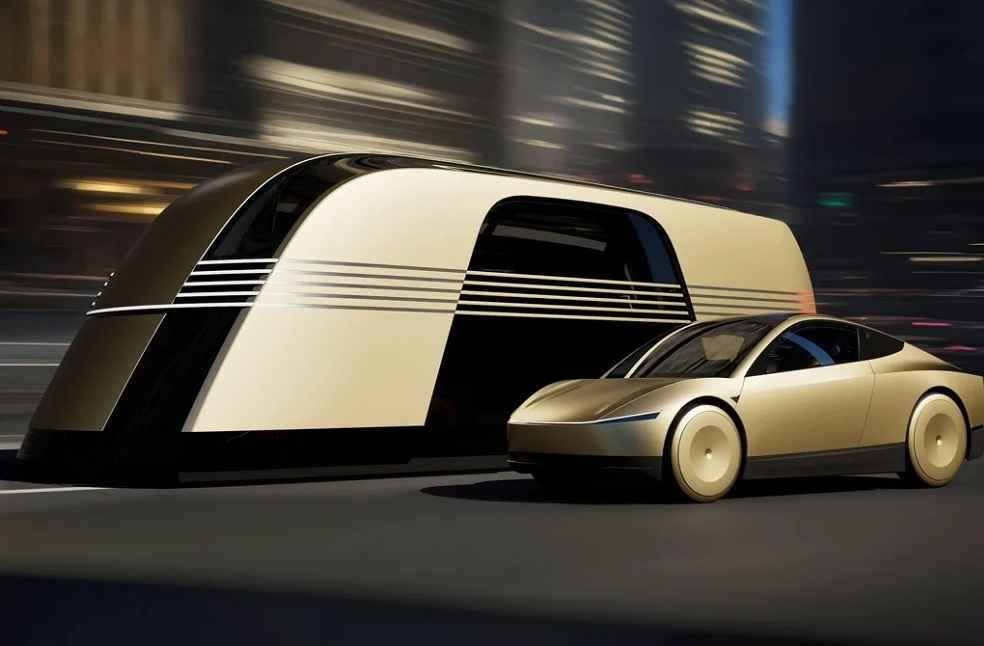
Tesla has begun offering paid rides in its driverless Cybercab vehicles in Austin, Texas, marking a significant step in the company’s push into autonomous ride-hailing.
Tesla announced Thursday that the Cybercab has officially entered service in Austin. The rollout remains limited, however, with the company operating a relatively small fleet as it expands its autonomous mobility program.
According to the Texas Department of Motor Vehicles, Tesla had registered 38 additional Cybercabs as of August 31, bringing the total number of registered vehicles to 45. The vehicles had previously been used primarily for employee testing and rides.
The Cybercab was first unveiled as a concept at Tesla’s ‘We, Robot’ event in October 2024. Its first production unit rolled off the company’s Texas Gigafactory production line in February, followed by formal mass production in April.
Tesla is also preparing to showcase the Cybercab publicly in China. Displays are planned in Beijing, Shanghai and several other cities beginning in mid-September. The events are intended to showcase the vehicle’s design and technology and do not indicate plans for a Chinese sales launch or commercial robotaxi service.

The Cybercab is designed specifically for autonomous passenger transport and does not have a steering wheel, pedals or conventional side mirrors. Its two-seat interior includes a 22-inch central display, while the vehicle relies on eight high-definition cameras and an end-to-end neural network for autonomous decision-making.
Unlike some competing autonomous-driving systems, Tesla’s approach does not rely on LiDAR or high-definition maps. The Cybercab uses the same AI4 computing platform found in the current Model 3 and Model Y.
Tesla said its global fleet had accumulated more than 22.5 billion kilometers of assisted-driving mileage as of September 2026. The company expects the Cybercab to consume around 10.2 kWh per 100 kilometers, equivalent to approximately 9.8 kilometers per kWh.
The Austin launch represents an important test of Tesla’s ability to move from autonomous vehicle development and testing toward a commercially operated robotaxi network.