


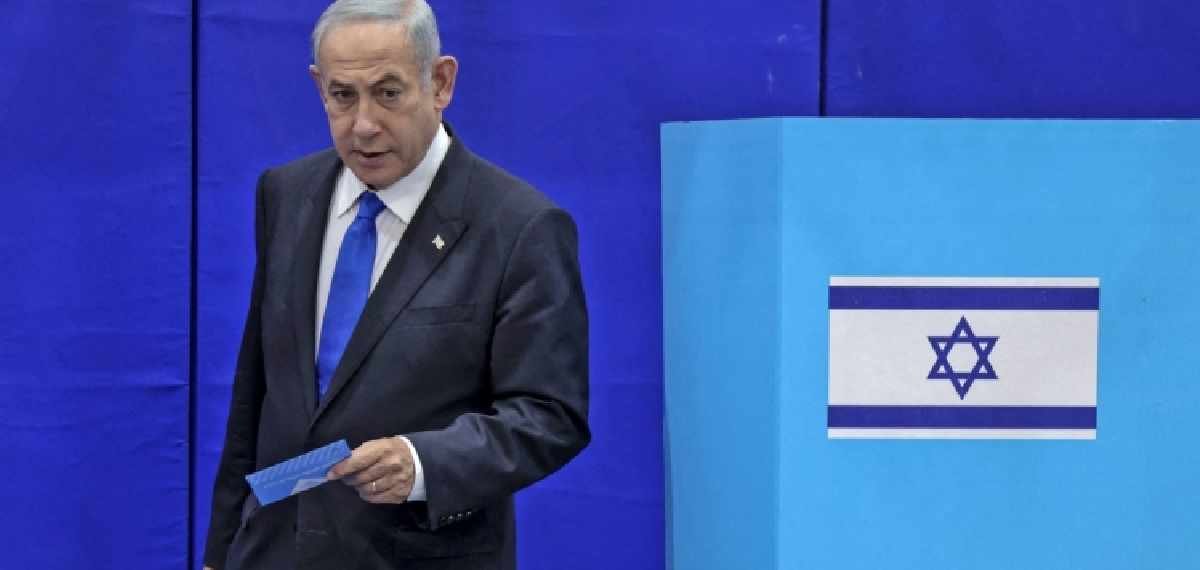
Initial results from the elections to the Knesset, Israel’s 120-member parliament, indicate a tight political deadlock with no major front securing an absolute majority. Support for Prime Minister Benjamin Netanyahu’s right-wing bloc has seen a noticeable decline as vote counting continues past the 55 percent mark. Netanyahu’s Likud party currently leads individual party tallies with 20.8 percent of the vote, closely followed by Gadi Eisenkot’s opposition alliance at 16.7 percent, Arab parties at 9.22 percent, and Naftali Bennett’s party at 9 percent. Remaining ballots, including double-envelope votes from military personnel and diplomats, will decide the final seat distribution.
Media projections indicate that Netanyahu’s right-wing coalition is leading in 55 seats, while the main opposition coalition holds 49 seats and Arab parties command 16 seats. With neither major coalition able to reach the 61-seat threshold required to form a government, the 16 seats held by Arab parties make them a potentially decisive kingmaker in parliamentary negotiations. The election recorded a historic voter turnout of 77.7 percent, marking the highest level of voter participation in Israel over the past three decades.

Under Israel’s electoral system, parties must surpass a 3.25 percent vote threshold to enter parliament, after which seats are distributed proportionally. Following the final tally, the Israeli President will invite the party leader best positioned to build a 61-seat majority coalition to form the next government. However, assembling a coalition will prove challenging for both primary blocs, as both campaigned on anti-Arab rhetoric, making formal alliances with the Arab parties politically complex for either side.