


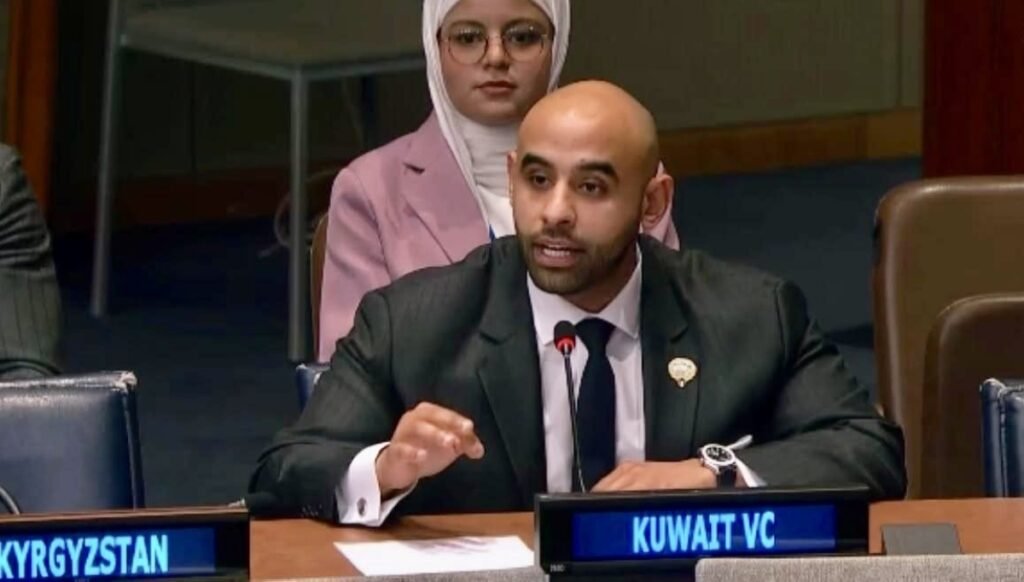
Kuwait has reaffirmed its support for United Nations efforts to end colonialism in all its forms, emphasizing the right of peoples to self-determination, respect for state sovereignty and territorial integrity, and adherence to international law.
Diplomatic attaché Mohammed Al-Mulla outlined Kuwait’s position in a statement to the UN General Assembly’s Fourth Committee, which addresses special political and decolonization issues.
Al-Mulla said the Palestinian issue remains a priority for the international community, calling for an end to the Israeli occupation and enabling Palestinians to exercise their legitimate rights. These include self-determination and the establishment of an independent state along the June 4, 1967, borders, with East Jerusalem as its capital.
Kuwait condemned Israeli actions against Palestinians and rejected settlement expansion, annexation, forced displacement and attempts to alter the legal and historical status of the occupied Palestinian territories, including East Jerusalem.
Al-Mulla also stressed the importance of maintaining the Gaza ceasefire, ensuring the unimpeded delivery of humanitarian aid, protecting civilians and creating conditions for recovery and reconstruction as steps toward a just and lasting peace.
Addressing regional security, he condemned Iranian attacks targeting Kuwait and several other Arab countries, rejecting actions that threaten the sovereignty, security or stability of states in the region. He called on Iran to fully implement UN Security Council Resolution 2817 of 2026.

Kuwait also reiterated its support for the United Arab Emirates’ sovereignty over the islands of Greater Tunb, Lesser Tunb and Abu Musa, including their territorial waters, airspace, continental shelf and exclusive economic zone.
Al-Mulla said Iranian decisions or practices concerning the islands were null and void and did not change what Kuwait described as the historical and legal facts supporting the UAE’s claim. He called for the dispute to be resolved peacefully through direct negotiations or referral to the International Court of Justice.
He further emphasized the need to protect international navigation and freedom of passage through the Strait of Hormuz, urging an end to practices that threaten commercial vessels or disrupt maritime traffic.
On the Moroccan Sahara issue, Kuwait reaffirmed its support for UN-led efforts under Secretary-General António Guterres and his Personal Envoy Staffan de Mistura to reach a just, lasting and mutually acceptable political solution. It also expressed support for Morocco’s autonomy initiative and welcomed UN Security Council Resolution 2797 of 2025.
Al-Mulla concluded by reaffirming Kuwait’s commitment to the UN Charter and its support for ending occupation and colonialism, resolving disputes through peaceful and just means, and strengthening international peace and security.