


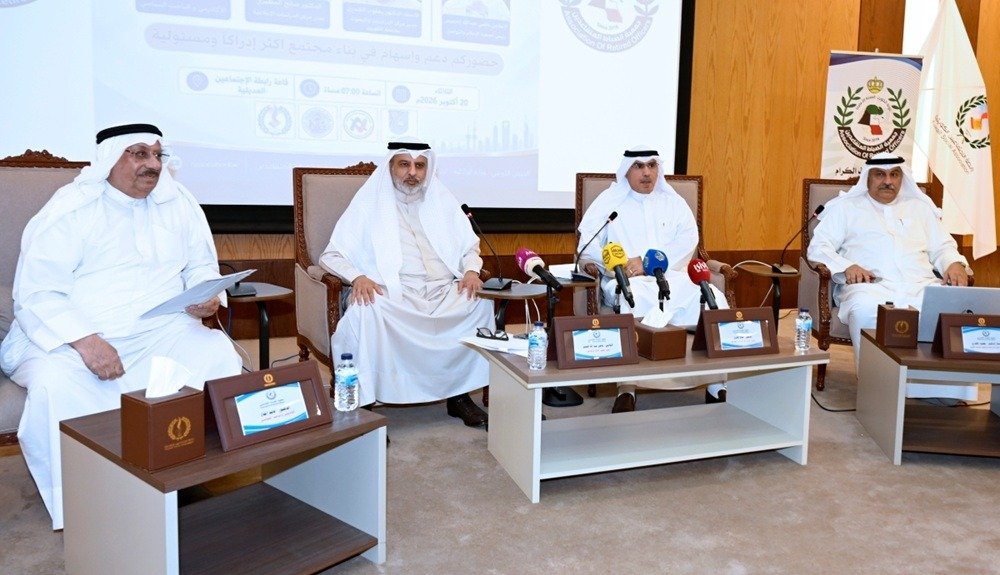
Kuwait’s media and security experts have called for a unified crisis communication strategy, stressing that accurate information, coordinated official messaging and responsible journalism are essential to countering rumors and safeguarding national security.
The recommendations were made during a seminar titled “The Importance of Media and Strategic Security,” organized by the Journalists Association and the Retired Officers Association on Tuesday evening. Discussions focused on the relationship between media and security, crisis management, misinformation and the contribution of research institutions to national decision-making.
Retired Major General Faisal Al-Jazaf, chairman of the Retired Officers Association, said public awareness had become a fundamental requirement rather than a luxury. He stressed that responsible information management was necessary to protect society, build public trust and help people respond to emerging challenges. He also highlighted the need for credible reporting amid rapid changes in the media environment.
Political researcher Dr. Ayed Al-Manna said security was essential to stability, development and everyday life. He emphasized that individuals should seek information from reliable sources, while government institutions had a responsibility to provide the media with accurate information to the greatest extent possible. He also urged caution when reporting on national security matters amid regional conflict.
Saleh Al-Mutairi, director of the Media Studies Center, said media organizations must do more than report breaking developments. They should explain events, provide context and help citizens and residents understand changing circumstances, particularly during periods of anxiety and conflict. He said the growth of digital platforms and artificial intelligence had increased the importance of verification, transparency and credibility. Speed alone, he added, should not take priority over accuracy and national responsibility.

Al-Mutairi also described modern warfare as a contest of narratives and images, warning that the way events are presented can influence public perceptions. He said responsible media coverage could help maintain public discipline and solidarity while limiting the spread of rumors.
Adnan Al-Rashed, head of the Journalists Association, referred to Kuwait’s experience during the 1990 Iraqi invasion and occupation and subsequent regional security threats. He commended the Ministry of Interior and its specialized agencies for their role in protecting the country. Al-Rashed proposed establishing a joint operations room bringing together military, security, firefighting, health and environmental authorities to coordinate responses and provide the public with reliable information. Without timely official updates, he warned, even people acting with good intentions could unintentionally spread false claims.
The seminar also highlighted the importance of research in policymaking and crisis preparedness. Dr. Yaqoub Al-Kandari, professor of sociology and director of the Center for Gulf and Arabian Peninsula Studies at Kuwait University, said research institutions should play a stronger role in supporting socioeconomic development and government decisions.
Al-Kandari said his center had sought to turn research and conference discussions into working papers for relevant authorities, but expressed uncertainty about whether its recommendations were being considered. He argued that Kuwait needed stronger contributions from researchers, academics and specialists to address gaps in policy development.
Participants concluded that strategic security depended not only on military and security capabilities but also on informed public awareness, professional journalism, coordinated official communication and evidence-based policymaking. They emphasized that stronger cooperation among government institutions and media organizations was vital to countering misinformation and maintaining public confidence during crises.