


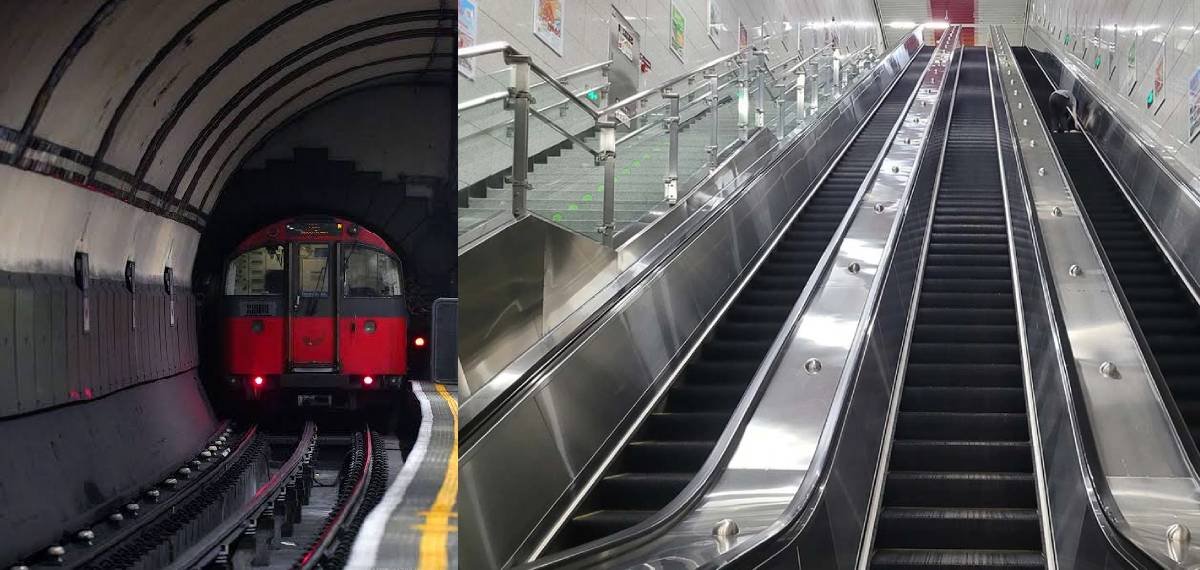
From platforms buried deep beneath China’s mountainous cities to Ukraine’s historic underground stations, some of the world’s deepest metro stations are remarkable examples of engineering. While Hongyancun in Chongqing is widely recognized as the world’s deepest metro station, India is preparing a new milestone with a proposed station in Lucknow.
Hongyancun, China
Hongyancun station in Chongqing, China, is commonly listed as the world’s deepest metro station, with its deepest point around 116 meters below the surface. The station serves the city’s rail network and connects areas separated by steep terrain. Its unusual location makes access a major engineering challenge, with passengers relying on lifts and long escalators to reach the platforms.
Arsenalna, Ukraine
Arsenalna station in Kyiv, Ukraine, has long been famous for its extraordinary depth. Its platform is approximately 105.5 meters below street level, placing it among the world’s deepest metro platforms. The station’s depth reflects Kyiv’s geography, including the elevation of the city near the Dnipro River. During Russia’s full-scale invasion of Ukraine in 2022, metro stations across Kyiv also served as shelters during air-raid alerts.
Zoloti Vorota, Ukraine
Another notable station in Kyiv is Zoloti Vorota, located approximately 96.5 meters underground according to commonly cited rankings. Opened in 1989, the station is known for its elaborate interior, featuring decorative details inspired by historic Ukrainian architecture. Its design makes it a destination of interest beyond its role in the city’s public transport network.
Hongtudi, China
Hongtudi station, also in Chongqing, reaches a depth of around 94.5 meters and is another example of the engineering challenges posed by the city’s rugged landscape. The station connects metro lines and uses multiple levels to accommodate passengers travelling through the network. Its depth reflects the difficulty of constructing urban rail infrastructure across Chongqing’s steep and densely developed terrain.

Pyongyang’s deep metro network
North Korea’s capital, Pyongyang, is also known for its deep underground metro system. Some stations are built far below the surface, and the network has long been associated with civil-defense shelter functions. However, depth figures for the system are not always directly comparable with measurements for individual stations, making precise international rankings difficult.
India’s deepest metro station planned in Lucknow
India is preparing a new underground engineering landmark at Pandeyganj in Lucknow, Uttar Pradesh. The proposed station is expected to extend approximately 37 meters below ground, potentially making it India’s deepest metro station once completed. It will be part of the planned 11-kilometer East-West Corridor connecting Charbagh and Vasant Kunj.
What makes Pandeyganj station different?
The proposed station’s main engineering feature is its stacked-track arrangement. Because the available road width in Lucknow’s old city is limited, engineers have planned to position one metro track above the other rather than place both tracks side by side. The design also has to account for nearby buildings, existing railway infrastructure and an old drainage channel.
The station is expected to surpass Howrah Metro station in Kolkata, which is approximately 34 meters deep, as well as other deep Indian stations such as Pune’s Civil Court and Delhi’s Hauz Khas. However, Pandeyganj will only claim the national record after construction is completed.
These stations demonstrate how geography, urban density and engineering constraints shape underground transport systems. As metro networks expand, cities are finding increasingly complex ways to move passengers beneath crowded streets while making deep stations accessible and safe.