


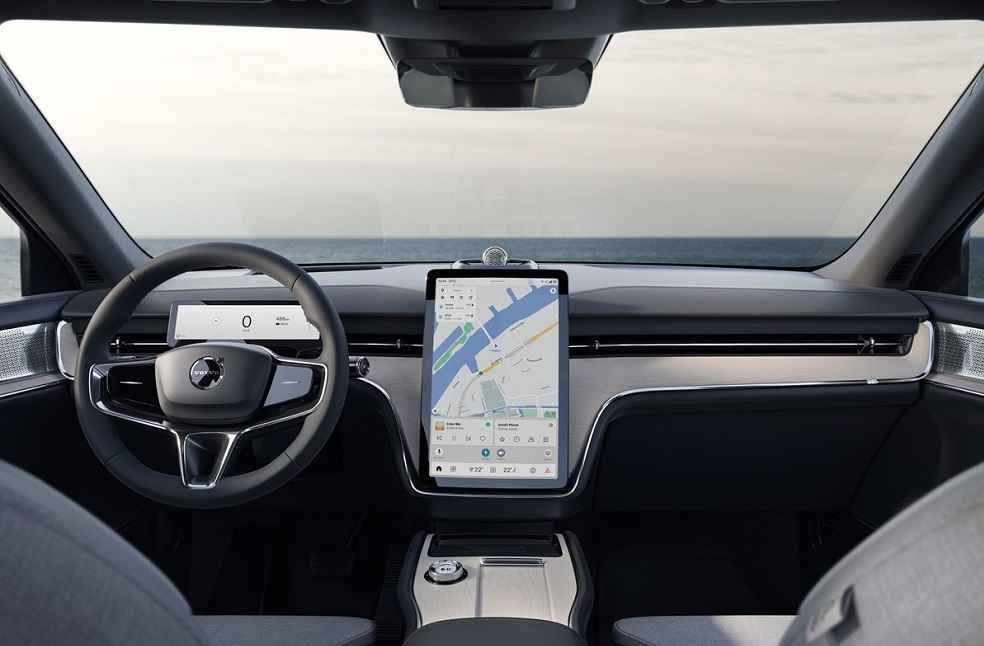
Volvo is upgrading its driver-assistance technology with support from Nvidia, aiming to introduce hands-free, point-to-point automated driving in urban environments across its next-generation models, expected to debut by the end of 2030.
The Swedish automaker, owned by China’s Geely, said the planned system will use cameras and other sensors to identify lane markings, vehicles and surrounding traffic conditions, allowing it to make driving decisions without relying on pre-mapped routes. The technology is intended to handle complex urban situations, including stop signs, traffic lights and unprotected left turns.
The system will be built on Nvidia’s Hyperion platform, which combines high-performance computing hardware with a sensor suite. Volvo also plans to integrate Nvidia’s Alpamayo software stack, which uses AI reasoning models to interpret road conditions and determine appropriate braking, acceleration and steering responses. The initial configuration will not include lidar, although the platform supports its addition.

Nvidia automotive executive Ali Kani said the technology is designed to manage challenging driving scenarios. Nvidia has also highlighted the importance of transparent and auditable decision-making to support safety validation and system verification. Volvo has described the planned technology as targeting Level 2++ driver assistance, although this is not an officially recognized category under the Society of Automotive Engineers’ automation classification.
Volvo said its longer-term ambition is to develop systems capable of eyes-off and mind-off driving, but it has not announced a launch date for those capabilities or confirmed which models will receive them. Until then, the company’s existing Pilot Assist system continues to provide features such as adaptive cruise control, steering support, lane-change assistance and curve speed assistance, with operation dependent on road conditions and system limitations.
The planned upgrade marks a step in Volvo’s efforts to expand automated driving capabilities through AI and advanced computing. However, the extent of driver supervision required and the availability of the new features will depend on the final system design and deployment plans.