


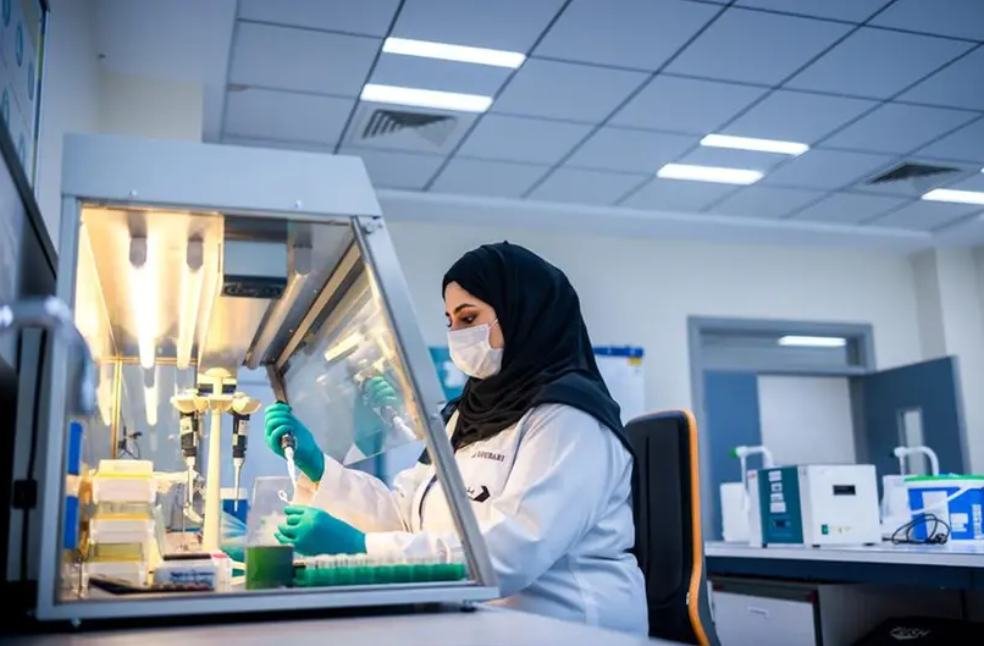
Dubai Municipality has launched the ViruGenetics Lab at Dubai Central Laboratory, marking the establishment of the UAE’s first specialised facility dedicated to detecting foodborne viruses using advanced genomic technologies.
The new laboratory has been introduced as part of Dubai Municipality’s efforts to strengthen food safety standards, protect public health and advance innovation in laboratory services, supporting the emirate’s broader vision of enhancing quality of life.
According to officials, the ViruGenetics Lab can process around 60 samples daily, with the capacity increasing to 100 samples during emergencies. The facility is designed to deliver rapid results, helping authorities accelerate inspections and make timely, data driven decisions based on accurate scientific findings.
The laboratory uses advanced digital PCR (dPCR) technology, considered one of the world’s most precise molecular analysis methods. The system enables both quantitative and qualitative detection of foodborne viral pathogens, including norovirus and hepatitis A and E viruses.
Authorities said the technology is highly effective in analysing complex food products such as dairy items, seafood, juices and fresh produce, while maintaining high accuracy levels even when analytical inhibitors are present. All testing procedures comply with ISO/IEC 17025 standards to ensure quality, reliability and operational efficiency.

Hind Mahmoud Ahmed, Director of the Dubai Central Laboratory Department, said the launch reflects Dubai Municipality’s commitment to establishing specialised laboratories equipped with the latest global technologies.
She added that the initiative strengthens Dubai’s position as a global leader in food safety and health monitoring while reinforcing the emirate’s ability to proactively manage public health risks.
Beyond testing, the ViruGenetics Lab will also function as an advanced scientific research platform, supporting partnerships with universities and research centres. The facility aims to contribute to the development of a national database for foodborne viruses and enhance scientific research in the sector.
Officials noted that the laboratory will support authorities by providing accurate genetic data related to viruses in the food chain, helping enable proactive and science based decision making in health safety management.