


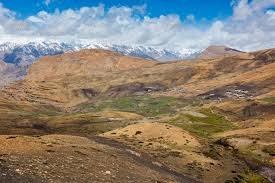
Perched at an altitude of around 15,050 feet (4,587 meters) above sea level, Komic village in Himachal Pradesh’s Spiti Valley is among the highest inhabited settlements in the world.
Surrounded by snow-covered Himalayan peaks, the remote Buddhist village has gained attention for its extreme elevation and challenging living conditions. A sign at the village entrance describes Komic as the “Highest Motorable Village in the World.” Other high-altitude settlements, including Dho Tarap in Nepal and Santa Barbara in Bolivia, have made similar claims, making precise comparisons dependent on how “highest” and “motorable” are defined.
Home to only around 100 residents, Komic experiences harsh weather conditions and low oxygen levels. Heavy snowfall can isolate the village from other parts of India for several months of the year, while internet and mobile connectivity remain limited.
Essential services are also difficult to access, with schools and hospitals located far from the settlement. Despite the challenging environment, generations of local residents have adapted to life at high altitude.
Komic recently drew attention through YouTuber Kanishk Gupta’s vlog, titled “India’s Village Closest to the Sky.” In the video, Gupta described experiencing a significant drop in oxygen saturation after arriving at the village. Long-term residents, meanwhile, are accustomed to the low-oxygen environment at high altitude.

The village’s traditional architecture reflects the need to withstand extreme winter conditions. Homes are built with mud walls that can be around two feet thick, helping provide insulation against the cold. Many houses are painted white, which helps reflect sunlight.
Water management is another challenge during winter, when freezing temperatures can make conventional sanitation difficult. Some homes use dry toilets, with the resulting waste later used as fertilizer for agriculture.
With very few trees growing at such elevations, residents have traditionally relied on dried animal dung, including from yaks, cows and donkeys, as fuel for bukhari heating stoves.
Domestic animals are also kept indoors at night to protect them from the severe cold. These practices reflect how residents have adapted their homes, fuel sources and daily routines to survive in one of the highest inhabited environments in the Himalayas.
Komic’s combination of extreme altitude, traditional architecture and resilient local practices continues to make it a distinctive destination in Himachal Pradesh’s Spiti Valley.