


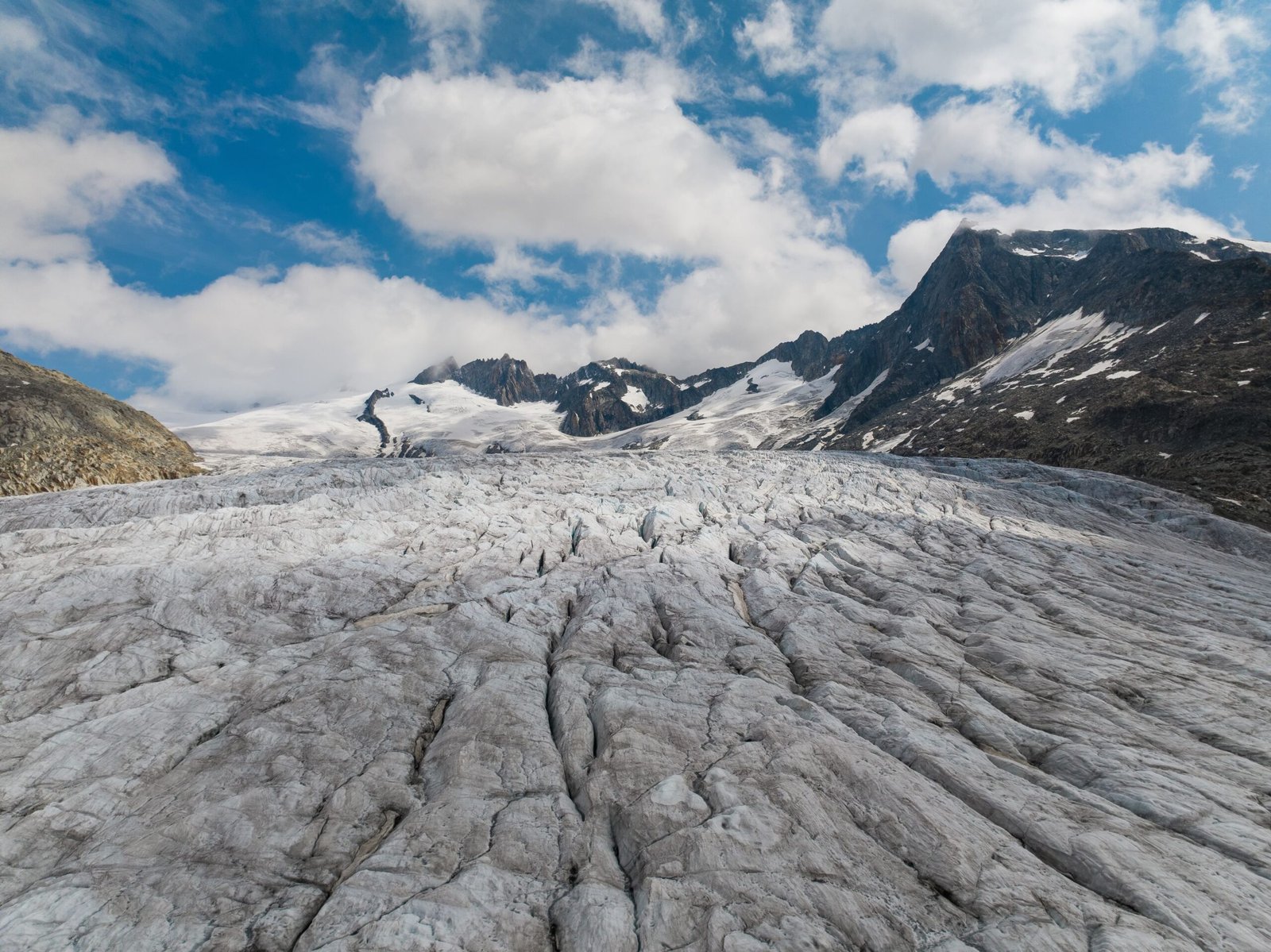
Swiss glaciers lost 5.5 percent of their ice volume in 2026, marking the second-largest annual decline on record as heatwaves and low winter snowfall accelerated melting across the Alps.
The GLAMOS Swiss glacier monitoring service and the Swiss Academy of Sciences warned on Thursday that Alpine glaciers face little chance of long-term survival if current warming conditions continue.
The latest decline adds to a sharp deterioration in Switzerland’s glacier reserves in recent years. Glacier ice volume has fallen by nearly a fifth over the past five years, highlighting the accelerating impact of rising temperatures on the country’s Alpine ice fields.
Scientists have linked the rapid loss to a combination of unusually high temperatures and insufficient snowfall during winter. Lower snowfall leaves glaciers with less protective snow cover and reduces the amount of ice available to withstand intense summer melting.

The findings come amid growing concern over the effects of climate change across Europe, which is warming faster than any other continent. Glaciers are particularly sensitive to changes in temperature and precipitation, making them important indicators of broader climate trends.
Matthias Huss, head of GLAMOS, stated that the warming currently being experienced can be attributed entirely to human-induced climate change. He added that without human emissions and the continued use of fossil fuels, the current warming would not be occurring.
The continued retreat of Swiss glaciers could have wider consequences beyond the loss of ice itself. Alpine glaciers contribute to freshwater supplies and influence river flows, particularly during periods when seasonal snow and rainfall are limited.
Researchers have increasingly warned that persistent warming could fundamentally alter Switzerland’s high-altitude landscape. The latest figures indicate that the pace of glacier loss remains exceptionally high, underscoring the continuing impact of climate change on the European Alps.