


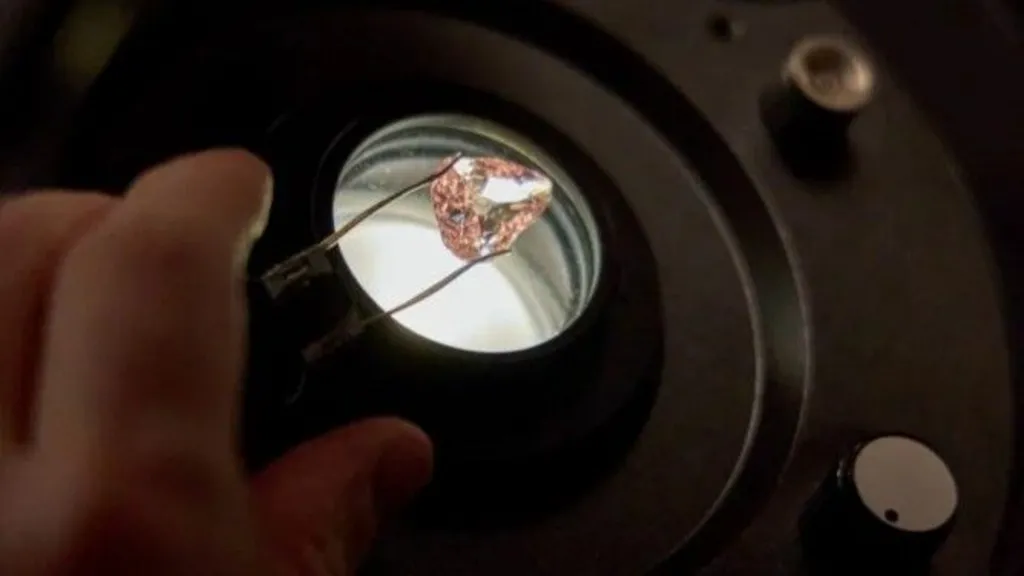
A rare nine-carat pink diamond stolen from a French château nearly 100 years ago has returned to public display, allowing visitors to see the historic gemstone for the first time since the 1926 theft. Known as the Grand Condé, the pear-shaped diamond is being exhibited at the Condé Museum inside the Château de Chantilly, north of Paris, until January 3.
The diamond was stolen during an overnight raid in October 1926. According to historical accounts, the thieves concealed it inside a hollowed-out apple. The gemstone was recovered several weeks later after a hungry maid at the hotel where the suspects were staying reportedly bit into the fruit. Museum director Mathieu Deldicque said the unusual story was widely reported in newspapers at the time, despite sounding far-fetched.

The exhibition includes findings from academic research into the diamond’s physical characteristics, which researchers say can help establish its identity, alongside archival material about its history and theft. Organisers have faced questions about security amid a series of high-profile thefts at European cultural institutions, including a daylight jewellery robbery at the Louvre in Paris. Deldicque declined to disclose the diamond’s insurance value.
The Grand Condé is among the royal jewels that survived the French Revolution, although its exact origins remain unknown. It was first documented in 1740 in an inventory following the death of Louis Henri de Bourbon, Prince of Condé. The jewel later belonged to Queen Marie-Amélie of Bourbon-Sicily and her son, Henri of Orléans, the Duke of Aumale, who bequeathed it to the Institut de France. The institute owns the Château de Chantilly and its extensive collection of artworks and manuscripts.