


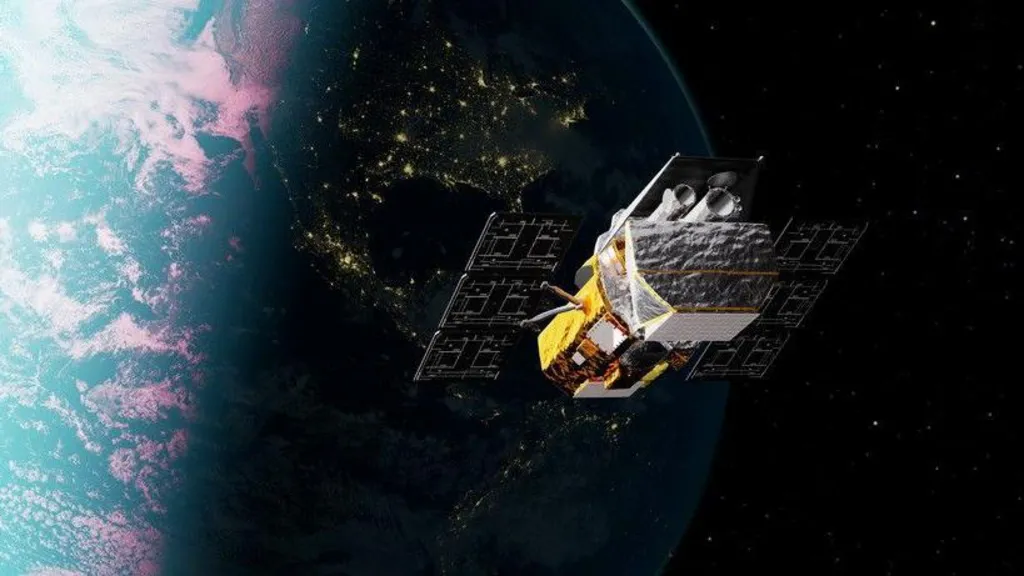
Washington: NASA has launched a pioneering mission to rescue its aging Swift space telescope, which is gradually losing altitude and risks falling back to Earth in the coming months.
The mission involves the LINK spacecraft, which will attempt to intercept the Swift Observatory, capture it using three robotic arms and raise it into a safer orbit. If successful, it would mark the first mission of its kind.
The Swift Observatory studies some of the universe’s most energetic events, including powerful gamma-ray bursts and other high-energy cosmic phenomena. Scientists say preserving the telescope is important because it continues to provide unique scientific observations.
According to experts, Swift’s orbit has been shrinking due to increased solar activity, which has caused Earth’s atmosphere to expand. The resulting atmospheric drag has slowed the spacecraft and gradually reduced its altitude.

Swift was originally launched into an orbit of approximately 600 kilometres above Earth but has since descended to around 360 kilometres, with much of the drop occurring over the past two years.
Space scientist Simeon Barber described the operation as a high-risk mission, but said the scientific value of the observatory makes the rescue attempt worthwhile.
If the mission succeeds, it could demonstrate a new capability for extending the operational life of satellites and space telescopes through in-orbit servicing.