


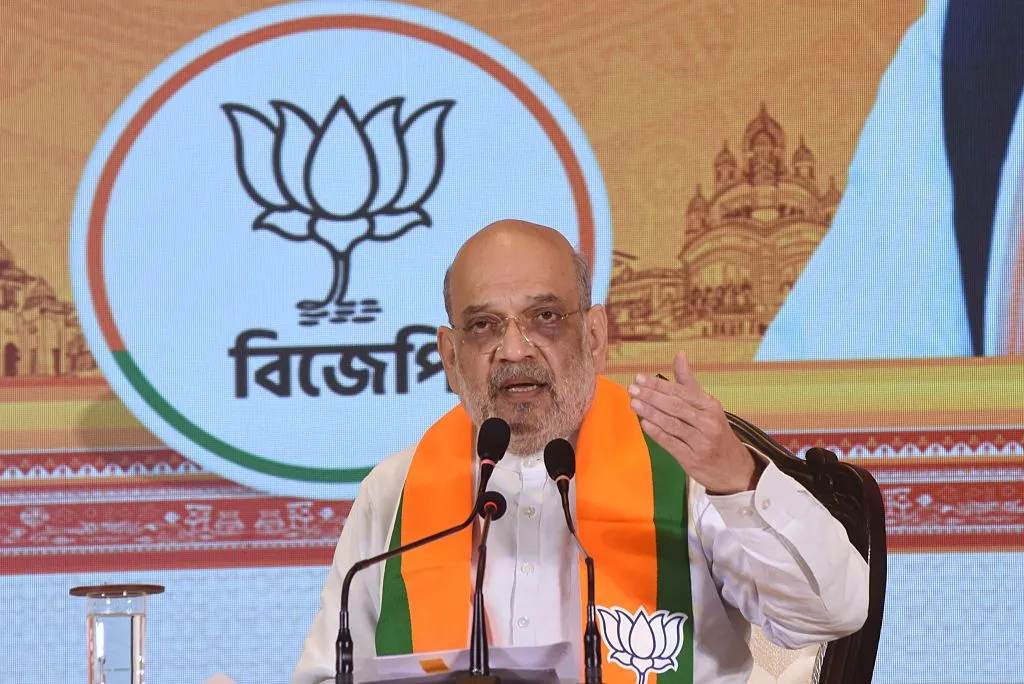
In a landmark political development, the Bharatiya Janata Party led by Narendra Modi has secured a historic victory in West Bengal, one of India’s most challenging electoral battlegrounds.
For years, West Bengal stood as a notable exception to the BJP’s nationwide expansion across India’s Hindi speaking heartland, western states and the northeast. Known for its strong political identity and long standing regional dominance, the state had resisted the party’s advances until now.
With a population of over 100 million, West Bengal’s electorate is larger than that of several countries, making this result one of the most politically significant victories of Modi’s 12 year tenure. The outcome marks not just the defeat of a three term incumbent, but the completion of the BJP’s long push into eastern India.
The state has historically favoured dominant parties. The Left Front governed for 34 years before the Trinamool Congress, led by Mamata Banerjee, ruled for the next 15 years until this election.
A steady rise, not a sudden wave
Political analysts describe the BJP’s victory as the culmination of a decade long strategy rather than a sudden surge. The party had already established itself as a major force in Bengal, consistently securing around 39 percent of the vote in previous elections. This time, it crossed the 44 percent mark, gaining the additional support needed to secure victory.
Despite lacking the deep grassroots organisational network traditionally required in Bengal politics, the BJP maintained a strong vote share, suggesting that its appeal has expanded beyond organisational strength.
Changing voter dynamics
The Trinamool Congress had built a strong coalition of women, Muslims and large sections of Hindu voters across rural and urban areas. Women, in particular, played a key role in sustaining the party’s electoral success, supported by welfare schemes and increased political representation.
However, analysts suggest that over time, welfare benefits began to be viewed as routine rather than transformative. This, combined with signs of organisational fatigue, weakened the party’s long standing support base.
The BJP capitalised on this shift by offering enhanced welfare promises while also mobilising broader Hindu voter consolidation, reshaping the electoral contest.

Role of community and voting patterns
Muslims account for around 27 percent of West Bengal’s population and play a decisive role in many constituencies. In previous elections, the Trinamool Congress secured overwhelming support in Muslim dominated seats, and early indications suggest it retained much of that backing.
However, the BJP offset this by consolidating support among other voter groups, allowing it to overcome demographic challenges and expand its reach.
Political churn across India
The election results also triggered significant political changes beyond Bengal.
In Tamil Nadu, the ruling Dravida Munnetra Kazhagam government led by M K Stalin was defeated by actor turned politician Vijay and his newly formed Tamilaga Vettri Kazhagam, marking the return of film star driven politics in the state.
In Kerala, the Congress led United Democratic Front defeated the Left Democratic Front, ending the last remaining Communist led government in India after two consecutive terms.
Meanwhile, in Assam, the BJP bucked the broader anti incumbent trend and retained power. The party and its allies also held on to Puducherry.
A defining moment
Despite shifts across multiple states, analysts agree that the most politically significant outcome remains the BJP’s victory in West Bengal. It represents a breakthrough in a state long considered resistant to national parties and signals a major reconfiguration of India’s political map.