


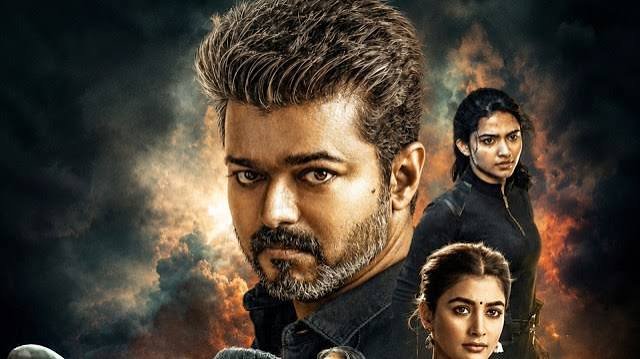
For millions of fans, Jana Nayagan is more than just another Vijay film. It marks the curtain call of one of Tamil cinema’s biggest stars before he fully transitions into politics. With Joseph Vijay now serving as the Chief Minister of Tamil Nadu, the film arrives as a historic milestone, making its theatrical release an emotional event rather than just a cinematic one.
The opening title card proclaiming “Honourable Chief Minister of Tamil Nadu Joseph Vijay” immediately sets the tone. While the film follows a familiar commercial template filled with action, punch dialogues and political references, its biggest attraction is that it is Vijay’s final appearance on the big screen.
From a filmmaking perspective, however, Jana Nayagan falls short of expectations.
Director H. Vinoth’s remake of Bhagavanth Kesari lacks the energy and emotional impact that made the original memorable. The film suffers from an underwhelming introduction for Vijay, uneven storytelling and a screenplay that struggles to maintain momentum across its lengthy 183-minute runtime.
Even composer Anirudh Ravichander, whose music has elevated many commercial entertainers, is unable to inject consistent excitement into the narrative. Apart from “Raavana Mavana Da” and “Blast”, the songs leave little lasting impression, while the background score rarely complements the film’s emotional or action-heavy moments. The visual effects also fail to meet expectations.
The film’s strongest asset is, unsurprisingly, Vijay himself.

Whether in action sequences, dance numbers or dialogue delivery, the actor commands the screen with effortless charisma. The fight scenes, in particular, are staged effectively and provide some of the film’s biggest crowd-pleasing moments. Even when the narrative loses direction, Vijay’s presence keeps audiences engaged.
Political references are woven throughout the film. Vijay’s character, Thalapathy Vetri Kondan, carries an obvious nod to his political party, TVK, while references to M.G. Ramachandran (MGR) and B.R. Ambedkar reinforce the film’s political undertones. Watching these scenes after Vijay’s rise to the Chief Minister’s office adds an extra layer of excitement for supporters.
The film also mirrors a historic moment in Tamil cinema. In 1977, M.G. Ramachandran became Chief Minister before the release of Meenava Nanban. Nearly five decades later, Vijay’s final film reaches theatres after he has assumed the state’s highest political office, creating a similar intersection of cinema and politics.
The emotional portions, however, do not land as intended. The sibling bond, a key element inherited from the original story, lacks emotional depth. Mamitha Baiju, who steps into a role that earned appreciation in the Telugu version, delivers a commendable performance during the climactic action sequence, but the emotional chemistry between her character and Vijay never feels convincing.
Ultimately, Jana Nayagan is a film that works better as a farewell celebration than as a well-crafted commercial entertainer. Fans will undoubtedly cherish the opportunity to watch Vijay on the big screen one final time, cheering every entrance, dialogue and action sequence. Those looking purely for strong storytelling, however, may find themselves disappointed.